Christopher Douglas Hidden Angel Foundation

Multi Sensory Environments, Sensory Stimulation

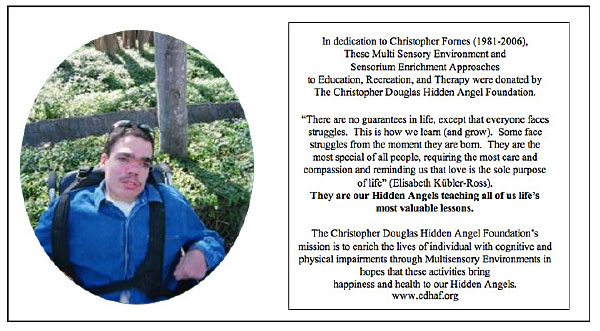
“There are no guarantees in life, except that everyone faces struggles. This is how we learn (and grow). Some face struggles from the moment they are born. They are the most special of all people, requiring the most care and compassion and reminding us that love is the sole purpose of life.”– Elisabeth Kübler-Ross
These are our Hidden Angels – teaching all of us life’s most valuable lessons.

  • Home
  • About Us
    • About Us
    • Multi Sensory Environments™
    • Inspirations
    • Dedications
    • News
      • Press Releases
      • Newsletters
    • Videos
  • Companion Pets
    • The Science
    • Companion Pet Resources
  • Education
    • MSE’s
      • What Are MSE’s?
      • The History
      • The Theory
      • The Need
      • The Benefits
      • Who & Where
    • Online MSE Training Course
    • Sensorium
      • Sensorium
      • Sensorium Enrichment
    • Seminars & Research
      • Conferences
      • Seminars
      • Research
  • Facilities
    • Dedications
    • Testimonials
    • Miami Jewish Health Center Videos

Baggaley Elementary School room appeals to senses

September 25, 2012 – A Baggaley Elementary School teacher is undertaking a big challenge to transform a small conference room into space that can be used to better the lives of children with autism.

A multisensory room in the Unity school will provide a controlled place where students with autism can interact with their environment, said Kara Stenger, an autism support teacher in the Greater Latrobe Area School District.

“The environment can be changed to reflect each individual’s needs. Many students with autism have difficulty with sensory processing. They do not process their environment as someone without autism would. Sights, sounds and temperature may really bother them or they may have no effect at all,” said Stenger, whose class has eight students in grades one through six.

After weeks of preparing the conference room to become a multisensory environment — removing tables, changing lighting and rearranging electrical outlets to suit the design — the district plans to open the multisensory environment to students on Wednesday , after a day of training for the school’s special educations teachers, Stenger said.

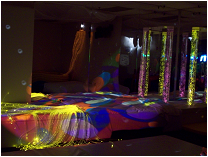
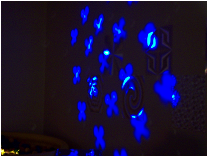
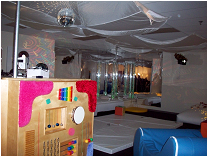
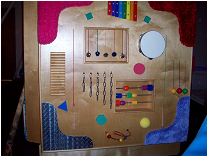
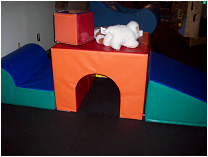
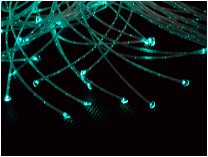
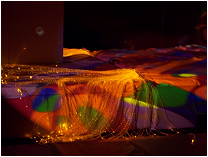
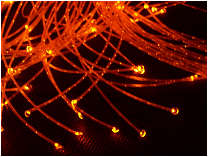
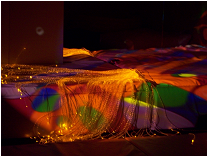
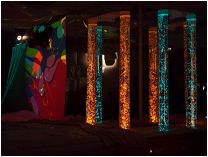
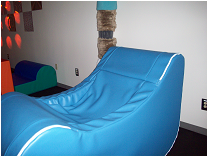
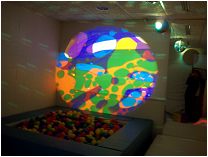
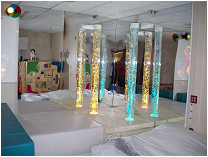
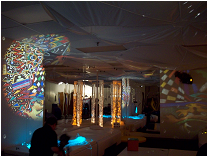
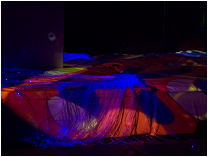
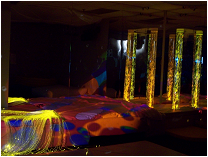
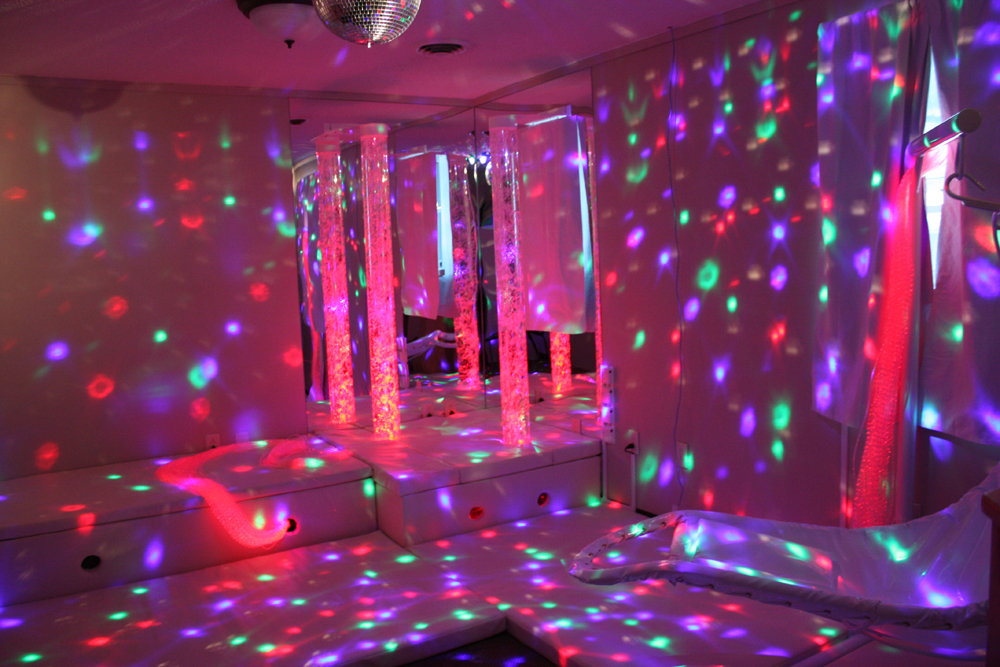
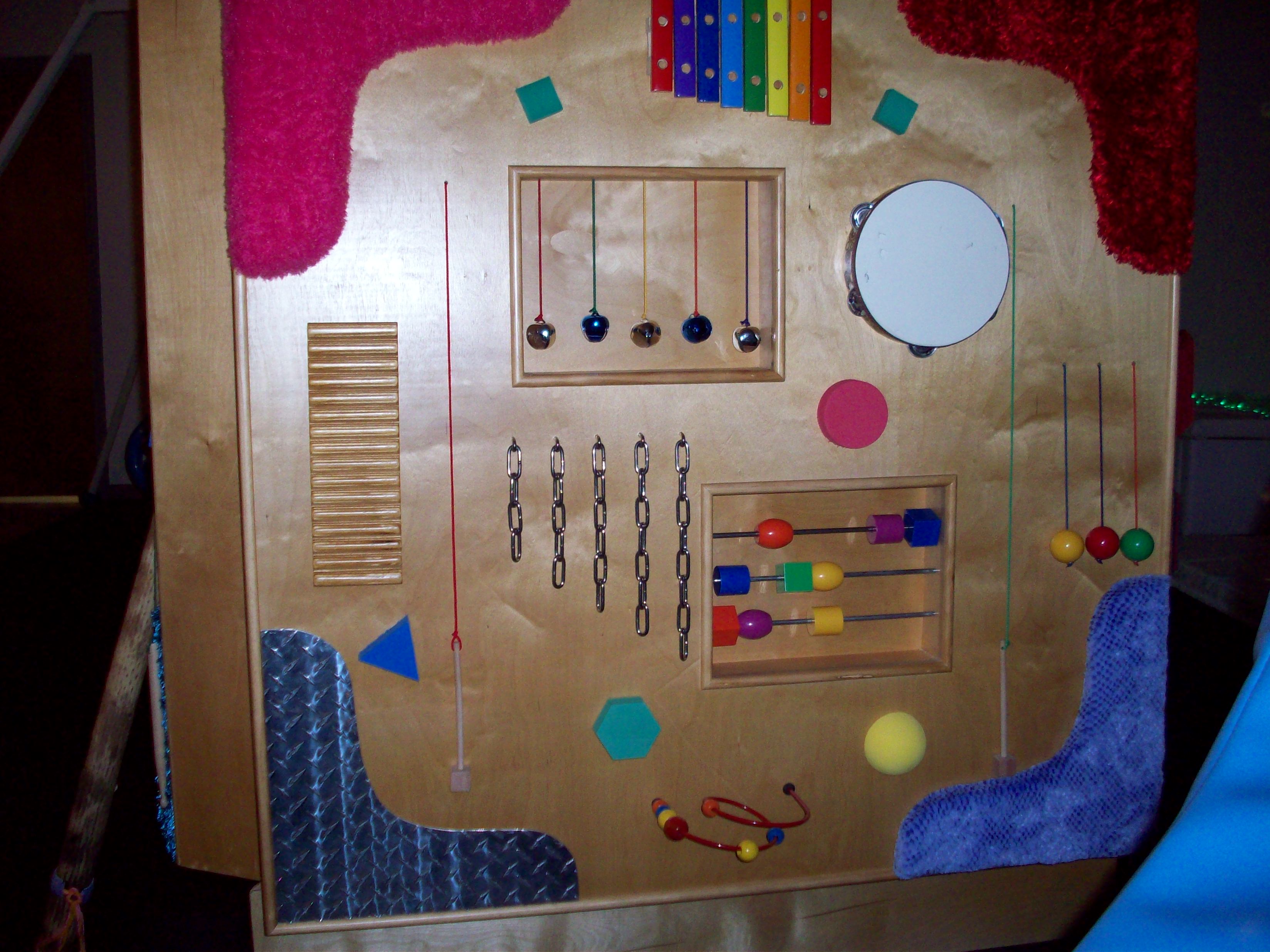
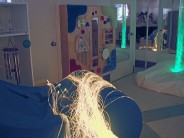
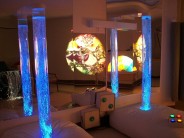
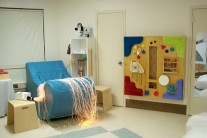
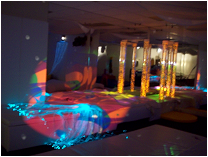
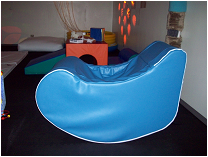
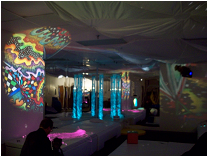
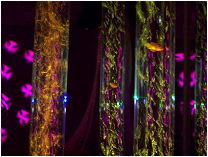
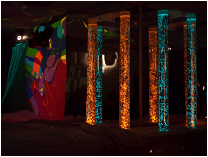
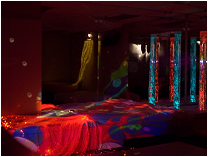
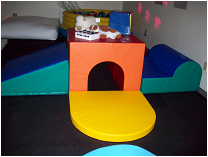
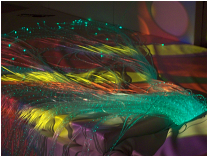
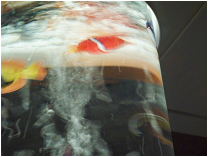
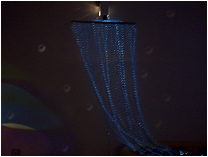
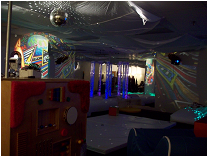
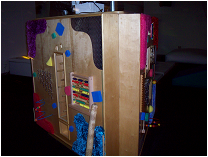
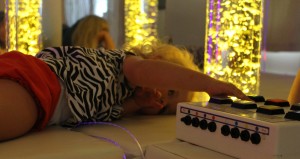
Upon entering, students will see two bubble tubes that change colors, a “vibromusic” platform that vibrates with music played in the room, soft padded play areas, mirrors, fiber-optics, a tactile board, bean bags, a sound system, a mirror ball and a projector for large-scale images.

Families can see and experience the room during an open house scheduled for 6 to 7 p.m. Oct. 10.

Students in Stenger’s class may use the room for varying lengths of time, based on their needs, she said.

The sensory stimulation can be intensified or reduced as needed. That stimulation can be presented in isolation or combination, packaged for active or passive interaction, and matched to fit the motivation, interests, leisure, relaxation and therapeutic or educational needs of the user, she added.

While the room has the elements of an area where students could play, it’s not intended for that, Stenger said. Teachers will monitor students’ use of the room.

“It’s not a place for the kids to come and do nothing. It’s for therapy, and this is part of their educational experience,” said Stenger.

Multisensory rooms are becoming more popular as a way of modulating the sensory system of children with autism, said Jeryl Benson, an assistant professor of occupational therapy at Duquesne University’s Rangos School of Health Sciences.

“Children with autism have sensory problems, and a lot of times, the information they are getting upsets them. They take it in and process it differently than others,” such as associating pain with a soft touch on the arm, said Benson, who has done clinical research on children with autism.

Rooms with specialized furnishings are important because they give the children “a chance to experience sensory information, but in a positive way,” Benson said.

Research has shown that people appear happier in a multisensory environment and tend to vocalize more and stay on task. For those with self-injurious or autistic behaviors, the gentle stimulation has a soothing effect and helps relieve agitation and promote relaxation, according to the Christopher Douglas Hidden Angel Foundation in Gadsden, Ala.

The school was involved in efforts that have raised more than $32,000 for the project, Stenger said.

Among those efforts, the McFeely-Rogers Foundation provided a $14,000 grant for the initiative, while the Hidden Angel Foundation provided an $11,740 grant. School groups raised $2,500.

The multisensory room cost about $24,000, and the remainder of the money raised was used to create a sensory environment room at Greater Latrobe Junior High School, Stenger said.

Several privately funded schools in the area have multisensory environment classrooms, Stenger said, but she believes Greater Latrobe will be the first public school in Westmoreland County with such a room. Stenger’s autistic support classroom has six students from the three elementary schools in Greater Latrobe and two students from Derry Area.

Stenger wants to continue fundraising efforts this year to provide satellite sensory environments at Greater Latrobe’s two other elementary schools and the junior high school.

“Our goal is to get a sensory corner in Mountain View Elementary School and Latrobe Elementary School. We recognize this isn’t the only school with autistic children,” Stenger said.

The Westmoreland Intermediate Unit provides several autistic support classrooms throughout the county, but not a multisensory environment.

“It is my hope that with the addition of a multisensory environment, we will be able to keep these students in their home district where their neighborhood friends and siblings are. Socialization is extremely important for students with autism, and building these friendships becomes much harder when the students are educated outside of their neighborhood school,” Stenger said.

Stenger’s students will continue to use her current classroom for academics. It has a small trampoline, some stress balls that youngsters can toss to release energy, rice bins, sand tables and special seats. That enables her and her teaching assistants to provide sensory input on a smaller scale, Stenger said.

“Our goal is to get those kids back to the regular classroom,” even if it is for just some classes, Stenger said.

Stenger said she believes the multisensory room could help more students than just those with autism.

“There are students in our school with visual impairments, certain speech and language impairments, and sensory needs that are not educated in my classroom. These students would also benefit from a multisensory environment,” Stenger said.

SOURCE: Trib Total Media, Inc.
The simple pleasures and joys that children experience running, playing and enjoying a sunny day are sometimes not available for children with special needs. Due to limitations, they don’t experience or are unable to interact with their surroundings, limiting their sensory experiences.
Multi-sensory stimulation is as necessary for survival as food and water. Isn’t it our responsibility to help every child feel included and offer them an environment where they can experience simple joys in life?
About CDHAF

Inside a Multi-Sensory Room

PBS Special - The Hidden Angel

Christopher Douglas Hidden Angel Foundation

The Christopher Douglas Hidden Angel Foundation (CDHAF) was created in honor and recognition of Christopher Douglas Fornes and Joyce Baye. CDHAF enriches the lives, health, and social well-being of people with cognitive, emotional, and physical challenges through the use of our Multi Sensory Environments™ (MSE). Our focus is on the design, development, implementation and education of our Multi Sensory Environments™ with the aim to enable productivity, inclusion, independence, and self-determination. Our approach is based on well-documented studies of neurological cognition and emotional development. We offer advisory and financial support for the establishment of integrated, publicly accessible Multi Sensory facilities and for basic research and … Continue Reading

 
  • St. John’s Nursing Center
    Ft. Lauderdale, FL USA
    2006

  • Extreme Makeover Home Edition
    Austin, TX USA (O’Donnell Family)
    2006

  • Southern Alberta Child and Youth
    Health -FLAMES House

    Calgary, AB Canada
    2009

  • Extreme Makeover Home Edition
    Hondo, TX USA (Craft Family)
    2006

  • Daytime Enrichment Activities
    Recreation

    Portland, OR USA
    2010

  • Cleveland, Tennessee Jr. High
    Cleveland, TN USA
    2010

  • Hondo, Texas Special Education
    Hondo, TX USA
    2006

  • Miami Cerebral Palsy Residential Center
    Miami, FL USA
    2006

  • Scarborough Village Alternative School
    Toronto, Ontario Canada
    2010

  • Anne Grady Center Pediatric
    Toledo, OH USA
    2010

  • AHRC – Seiff Educare
    Boemia, NY USA
    2010

  • Jewel C. Wietzel Education Center
    San Antonio, TX USA
    2006

  • Hospital Rivier-des-Prairies
    Montreal, QB Canada
    2006

  • United Cerabal Palsey – Birmingham
    Birmingham, AL USA
    2010

  • St. Peter’s Academy
    Benoit’s Cover, Bay of Islands, NL Canada
    2010

  • Lake Asbury Jr. High
    Green Cove Springs, FL USA
    2006

  • Allegany ARC
    Wellsville, NY
    2013

  • MCFI – Milwaukee Center of Independence
    Milwaukee, Wisconsin USA
    2012

  • TLC – The Treatment and Learning Center
    Rockville, Maryland USA
    2012

  • M.O.R.G.A.N. Project
    Melbourne Beach, FL USA
    2011

  • Baycrest Hospital
    Toronto ON, Canada
    2011

  • Baycrest Apotex
    Toronto ON, Canada
    2011

  • EGF Polk County DAC
    East Grand Forks, MI USA
    2011

  • Colisano Children’s Hospital
    Syracuse, NY USA
    2011

  • Miami Lakes Therapy Center
    Miami Lakes, Florida
    2010

  • Anne Grady Center
    Holland, OH USA
    2009

  • A Society for Treatment of Autism
    Calgary, AB Canada
    2008

  • Southeastern Elementary School
    Rome, GA USA
    2008

  • Portage Collegiate Institute
    Portage La Prairie, MB Canada
    2009

  • Centre de Readaptation
    Montreal, QB Canada
    2009

  • West Montreal
    Centre de Readaptation

    Lachine, QB Canada
    2007

  • Children’s Home RTF
    Chenango Forks, NY USA
    2007

  • Alternative Day Programs – Centre de Readaptation
    Kirkland, QB Canada
    2009

  • Augusta Evans Special School
    Mobile, AL USA
    2007

  • Miami Jewish Home and Hospital
    Miami, FL USA
    2007

  • Central Wisconsin Center
    Madison, WI USA
    2009

  • Miami Jewish Home and Hospital-#2
    Miami, FL USA
    2009

 
fbyt

Site Agreement

By accessing this website you agree to the use of our site agreement.

Search

info@cdhaf.org

Copyright © 2026 · Outreach Pro on Genesis Framework · WordPress · Log in

Evolution of the Legacy of a Hidden Angel

We are extremely proud of the pioneering role we played many years ago in bringing multi-sensory environments (MSE) to North America and raising their profile since 2005.  Today throughout North America, more and more organizations are implementing multi-sensory stimulating environments for individuals with special needs.  We are excited that this will allow us to be more proactive in providing guidance and training in MSEs.  Thus, we are proud to provide our MSE online training course free of charge for those wishing to learn more about this recreational space that provides therapeutic and educational benefits.  You can access the training at www.msetraining.com

Over the years our namesake, Chris has been the driving force behind the numerous initiatives to enrich the lives of individuals with special needs by providing:

• Design and financial support for over 100 MSE rooms
• Intellectual property for the development of a program for premature babies
• Equipment and expertise for the use of MSE with seniors challenged by dementia / alzheimers
• Online training focused on MSE methodology and best use practices
• Donations to support food for special needs children in impoverished areas
• Formation and co-management of an unprecedented program to train first responders in dealing with individuals with special needs
• Developing companion pets through sensory stimulation and life experiences
• Design and construction of the first MSE environment designed for individuals with special needs that incorporates life without limits and nature as the sensory component
• Ongoing support for a playground designed for individuals with special needs
• Provided Multi Sensory Room on Extreme Makeover Home Edition to the Craft Family (Hondo, TX)

The preceding and the following illustrate the multifaceted legacy of an extraordinary young man who, to quote Kubler-Ross – “taught us love is the true meaning of life”.

As we move on from the funding and installing of multi-sensory rooms (as the support from others grows), the foundation will continue to exist as an open knowledge-based organization providing guidance to facilities wishing to implement a multi-sensory environment (MSE) for children and adults with special needs.

The Foundation website will become an informational and training tool to provide research-based methodology and information, including MSE concepts, MSE designs, equipment uses, MSE benefits, and operational training. Organizations looking for funding will be directed to other charitable organizations that support the use of multi-sensory environments in education, recreation, and therapy.

In addition it will provide a free online training program to provide knowledge on best practices and the overall philosophy of MSE based on decades of hands on experience.


The sister organization to CDHAF, Hidden Angel Companion Pets will also be providing information on the benefits of companion pets for children with special needs and best practices in raising a pet to be a natural companion animal. Pets provide therapeutic benefits such as companionship, love, humor, play, exercise, a sense of power and outlets for displacement, projection and nurturance; Talking to animals and the tactile experience of petting animals reduces stress and enhances physical health (including lowering blood pressure and reducing heart rate) and longevity; Animals enhance psychological development, improve social skills, increase independence, and increase self-esteem; Animals can be a source of comfort and contribute to ego strength among children; The human-animal bond supports empathy development, the ability to form and express attachments, and the reaction to grief and loss; and Dogs help increase activity among those with disabilities, prevent childhood obesity, promote recovery after a heart attack, and encourage walking in the elderly.

Looking ahead, those of us committed to Chris foresee many more initiatives reflecting his life and impacting the lives of others.